By: Theresa-Christine Etim
When University of Florida student Jacob Yarick learned AI for his undergraduate program, increased game-fan interaction and sports data collection were among the upsides he discovered to using AI in sports. New job prospects and sports technology in an emerging technology space are the crux of why AI in sports is appealing to seasoned industry professionals and newcomers like Yarick.
“As we are in the AI revolution, I see AI being utilized in a variety of ways in general and especially in the sports world as time goes on,” Yarick said.
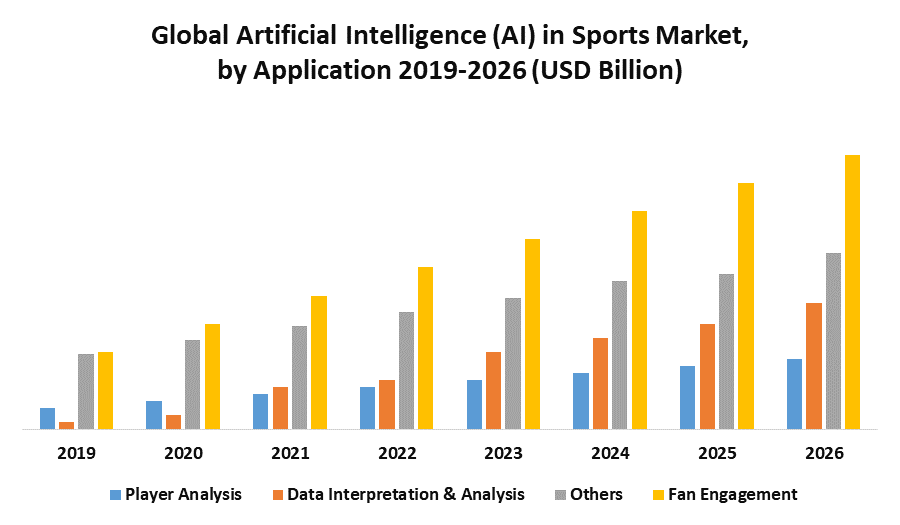
To play with precision in sports is an immensely important requirement; players must play with precision throughout the entirety of their career, as technical rules and aspects define each game and their outcome. That, along with the influx of modern technology, makes it easily understandable how sports could form an unlikely alliance and boost with specifically AI, as told by current and emerging AI professionals.
AI—or Artificial Intelligence—is technology enacted by machines, applications and computer systems to mirror human intelligence. It is with this technology that athletes can improve field studies toward opposition analysis, as well as improve overall athlete health.
One of the many ways student-athletes improve their health with AI is through biomedical engineering. Data is collected and analyzed through sports performance and studying body function using wearable technology (commonly known as wearables, like smartwatches) and other sports performance tools.


Jennifer Nichols, Ph.D. and assistant professor at the University of Florida’s Biomedical Engineering Department, said most of the technology used by adults in the mainstream technology market is considered a wearable, and they are often used as sports performance tools that analyze what shape an individual is in.
“A wearable is pretty much any device that collects data on the human state,” Nichols said. “This includes FitBits, Apple Watches and skin patches. The patches—for example— read your sweat levels. There are also mouthguards that can (collect data). In the same way your phone can track you, these (performance tools) can track you too. They can use listed data streams, movements, and heath rates to read your health.”

These wearables are also being studied for how they can prevent injury. According to Nichols, the key focus of using AI technology with wearables is how they can prevent them.
“I think the big question for (AI sports data), is ‘How can I know about an injury 30 seconds before it happens?’” Nichols said. “We want to get to it before it happens. It sounds like a dream, but if you get to the predictors and do risk stratification, you can figure out what is a greater risk of injury to prevent something from happening. AI has abilities to look at that and relate to that.”
According to Sportsologygroup.com, wearables help track athletes’ body movements and use biomechanics to target weakness or fatigue in certain areas. Games and practice footage are also being analyzed by AI video technology to minimize possible injuries and their risks. This is the data Nichols mentioned that can be used to not only prevent injuries, but improve game playing.
Game-playing improvement in AI technology is not only one of the cornerstones that connect technology and sports, but it’s also one of the many AI projects of Inventor and BYU professor Dr. D.J. Lee.
Lee is a professional in the AI community who worked with the technology in its early days in the 1980s. He’s also a part of the recent revival of AI, as he’s a part of the slew of AI inventors who develop apps using it. An example of this is AuthentiFace, the AI technology firm that uses labeling methods as means of protection against hacking. It’s this AI labeling method that Lee believes can be used for game improvement.
Lee is also gearing up to implement these AI labeling methods in Football through film study, where teams study the game films of their opposition team and analyze their playing methods. AuthentiFace’s labeling was the driving force behind the labeling work he and a couple of his students at BYU used to study offensive formations for the home team. They used images from the football game Madden 2020 to help label players and their positions.
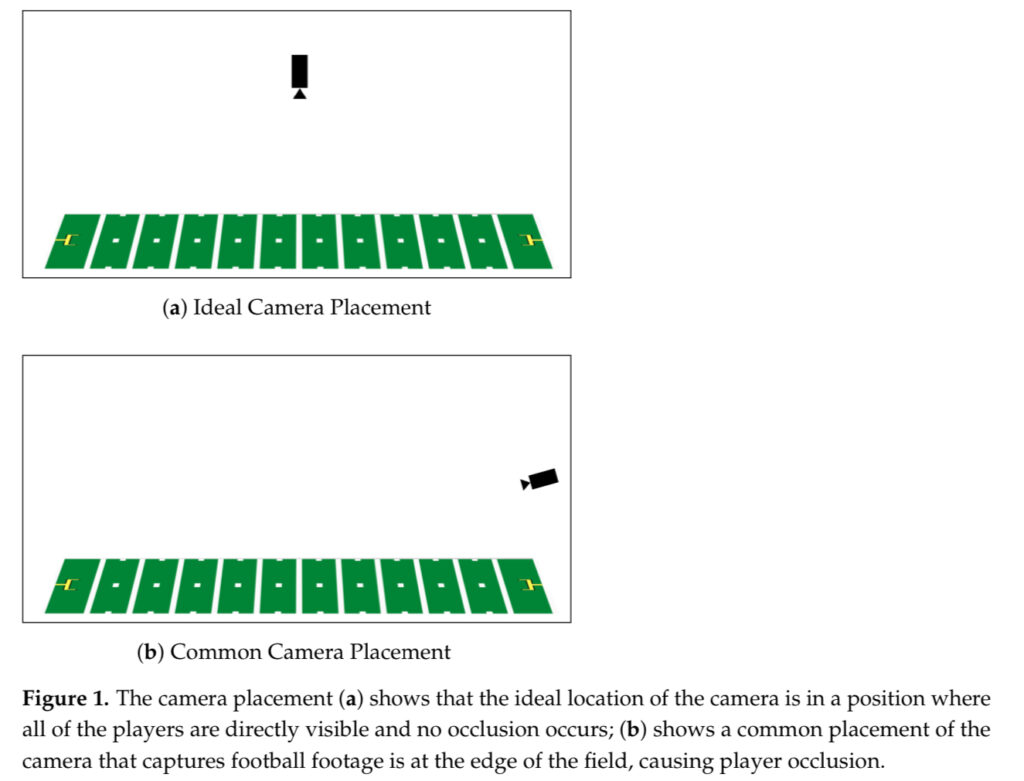

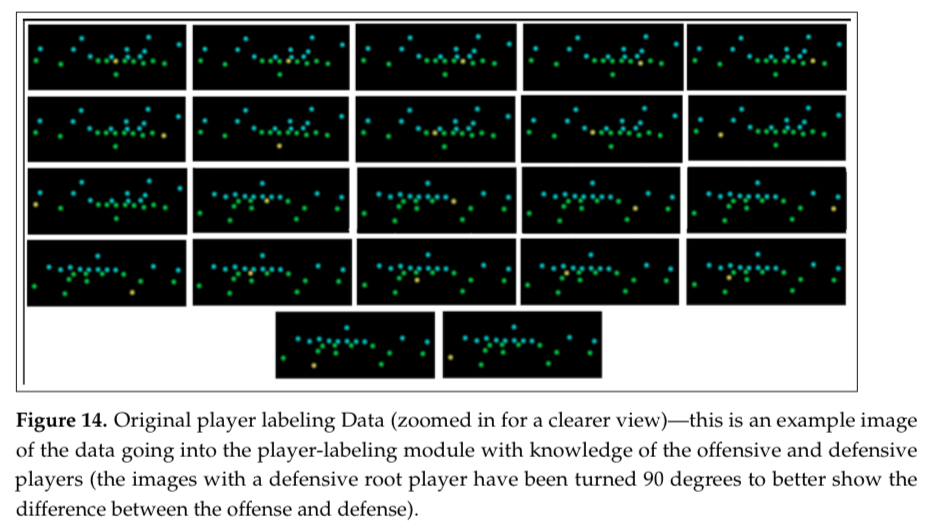
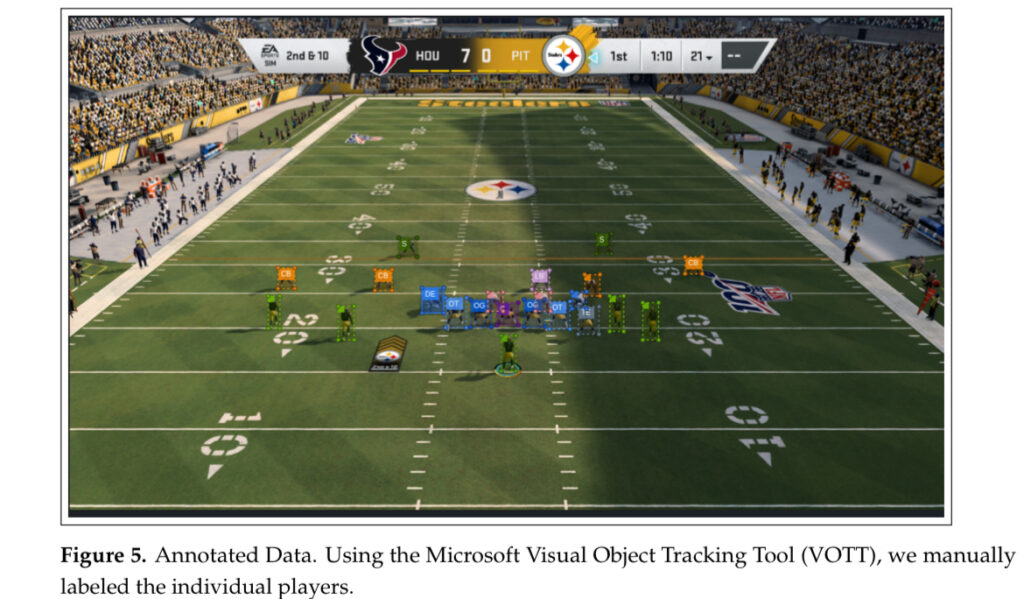
Lee said he’s in the beginning stages of development with his AI methods. He is using them on high school athletes first, although college students are who Lee is setting his sights on.
“Right now, we’re using AI analysis for teams to study their opponents using their acquired footage,” Lee said. “Right now, we are focusing on high school football. There are over 16,000 high schools in the U.S. and high school teams are more open to (changing certain film methods) than college teams. It’s a good start but we plan to (work our way up to college and professional football).”
While Lee is gearing up for AI in college sports, it’s already being taught in universities across the nation, one of which being the University of Florida.
Dr. and Instructional Associate Professor Nancy Ruzycki is one of the professors at the university; she instructs at a university-led AI and technology summer camp taught by teachers and aided by college students. She said she aims to teach AI in its basic form.
“We ask the questions that matter, so understanding the limits, the benefits, the limitations of AI is where we fall,” she said. “We create camps and curricula that teach people foundational AI.”


The grade school camps were successful in its first year, and while Ruzycki and her team later moved the camps from the university to a district facility for students to have closer access to it, Ruzycki and her team also trained the teachers and college student assistants on how to instruct the kids.
One of those student assistants is Yarick, a UF Astrophysics and Aerospace Engineering double major who’s eyeing an aerospace engineer career for places like Blue Origin and Space-X among his job prospects.
While he contemplates his choices of pursuing engineering, data science or machine learning researcher/engineer, he still carves out time to create lessons like AI programing and chatbot.
“I mostly work for Dr. Ruzycki’s summer camps,” Yarick said. “I design, create, and teach lessons related to Python programming and AI. Last summer, I was in charge of creating the lesson material for an AI summer camp for high schoolers. I created ten lessons within Jupyter notebooks that gradually worked their way up from the basics of Python to the students creating their own musical chatbot. The project allowed the students to see how programming is connected to AI which was a fantastic learning experience.”
What he’s taught and learned reflects the current college AI curriculum nationwide, while also reflecting AI analysis used in college sports by university staff members like Lee and Nichols. Yarick understands this, and said he sees it going beyond just college sports.
“I believe utilizing AI in sports will be helpful,” Yarick said. “I think there could be many opportunities for AI to be incorporated into (professional) sports. I think AI could use pattern recognition to find new statistics that were overlooked. AI could also be implemented during a game to increase fan excitement. For example, it could help decide which fans should be placed on the kiss-cam, or maybe it could decide which songs to play during the game to increase fan engagement. I think it could transform the sports industry mostly for the better.”
While he sees major promise for AI in the future, he also sees setbacks for the transformative technology, one of which being employment decreases among human jobs in the US.
“There could be some downsides such as the need for less employers, which would add to the unemployment rate,” Yarick said. “For example, I could imagine AI could be utilized to replace referees. With respect to basketball, it could decide when a foul is called, when a ball goes out of bounds, or even immediately stop the game when a coach calls timeout. Sometimes these things are missed, so AI could help streamline the process. But as a result, there would not be a need for referees.”
Still, Yarick sees AI being utilized in a variety of ways within the sports world in the future: AI robots, healthcare to monitor player health, player- insights for game preparation, and changes in how humans interact with sports entirely. He also shared his thoughts on AI impacting other fields.
“AI will be heavily utilized in the science realm as it will accelerate research pertaining to drug discovery, predicting natural disasters, and even physics and mathematics,” Yarick said. “I’m truly excited to see what the future holds.”
When it comes to the future of AI, it remains largely unsure by its industry insiders due to its rapid growth in many forms. But what is for sure by Nichols, Lee, Ruzycki and Yarick, is how it’s currently reshaping college sports, and that its future lies in further reshaping professional sports in the future.
